
A digital art archive for every piece
Keep a work and its story together. Bring scattered photographs and notes into a record you can return to, refine, and build on over time.
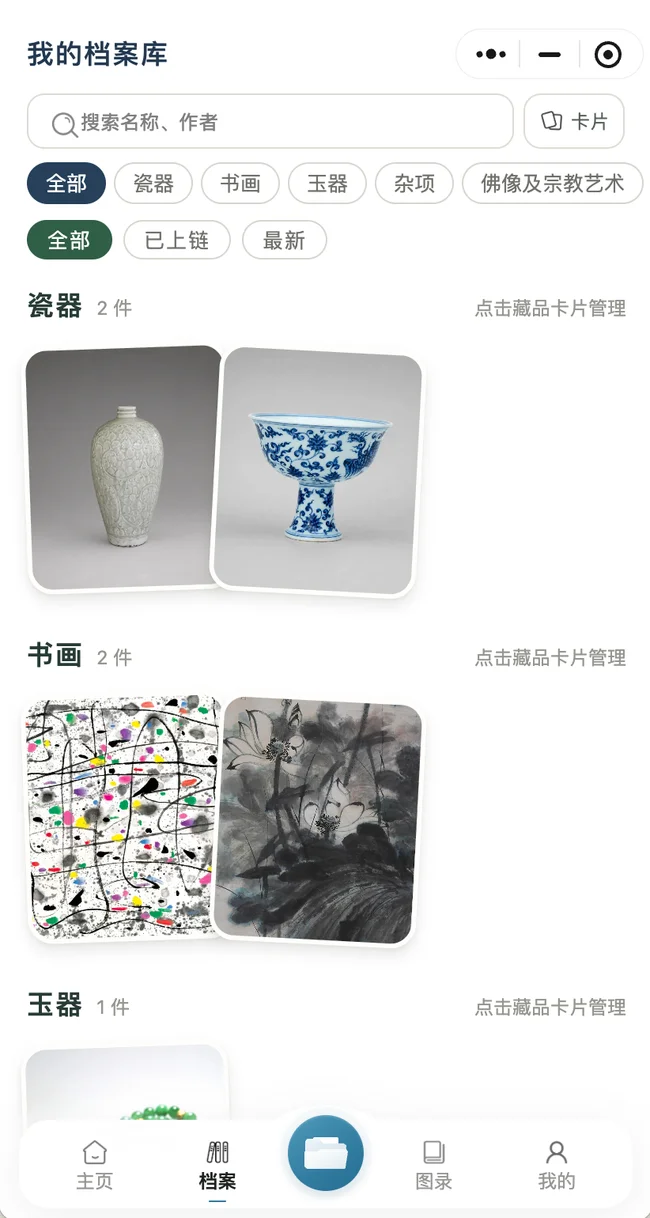
One piece, one connected record
Collection information can end up spread across photo libraries, messages, and notebooks. A digital art archive keeps photographs, details, and notes together under the work they describe. Ceramics, paintings, jade, and other art collections can be recorded by category.
From visual details to provenance notes
Record a name, artist, date, material, and dimensions alongside a main photograph, detail images, and descriptions. Add provenance notes, observations, and collection stories as you learn more. Record what you know without presenting uncertain information as an established conclusion.
Make organization part of the routine
Browse artwork cards, use categories and search, and organize records with tags. Storage locations and inventory tools help connect a digital record to the physical object, making it easier to find the piece behind a photograph.
Private first, shared by choice
New records are private by default. Choose an individual work or a digital catalogue to share through a link or QR code. Private fields such as source information remain in your own archive; public exhibition submissions follow a separate review process.
Where to begin
- Photograph the work and create its archive record
- Add known details, categories, and personal notes
- Choose whether to share, curate a catalogue, or use evidence and inventory tools
Questions about digital art archives
How is an archive different from a photo library?
A photo library organizes images. An artwork archive organizes records around individual pieces, connecting photographs with names, artists, materials, dimensions, and notes that you can keep updating.
Does creating a record make it public?
No. New records are private by default. Sharing is a deliberate choice, and public exhibition submissions have their own review process.